.svg)
by
Yohance Harrison
May 12, 2023

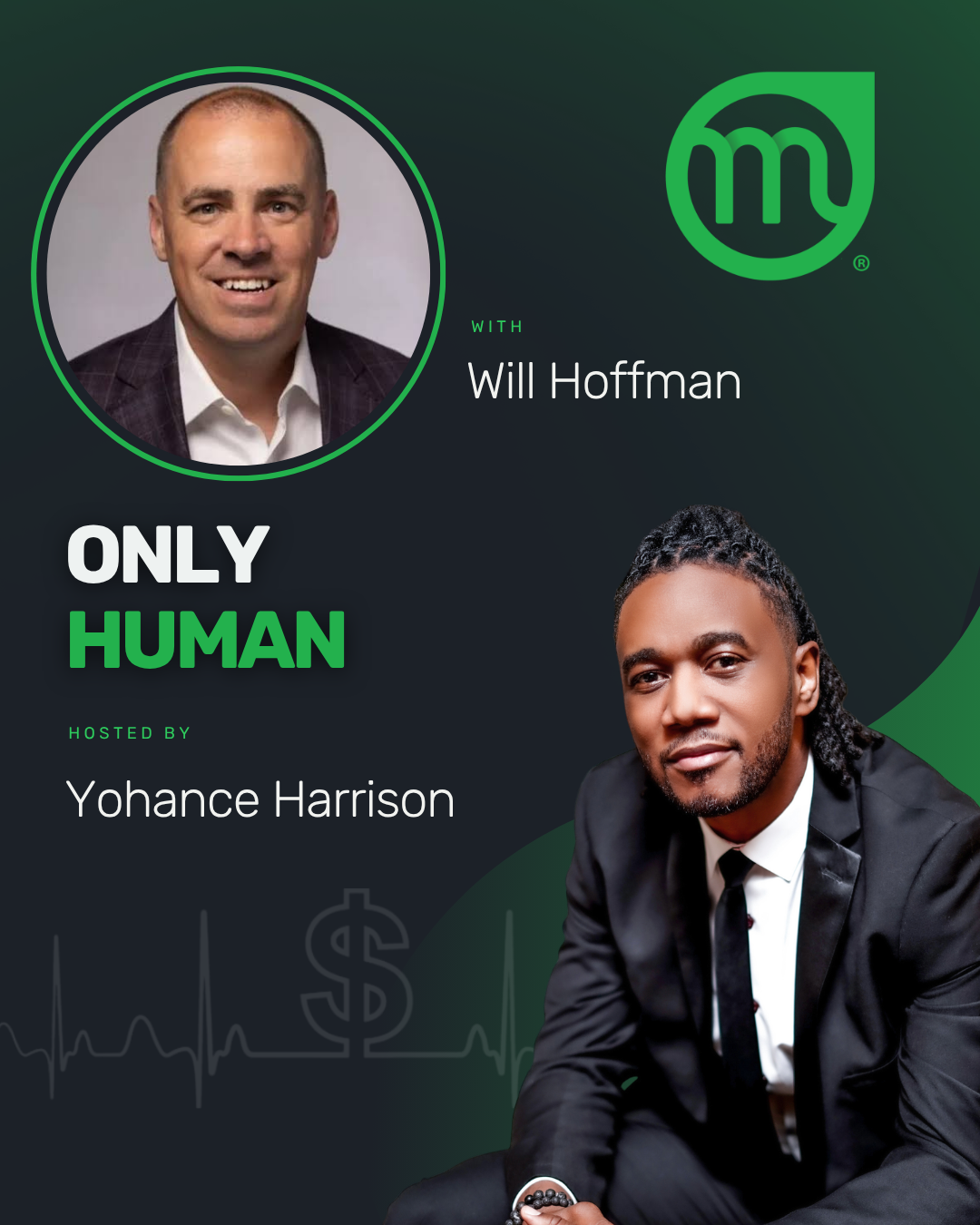
AI has become one of the biggest talking points in wealth management, but this episode of Only Human gets past the hype and into actual use. Will Hoffman sat down for a conversation about what technology is really doing inside advisory firms right now: saving time, improving follow-through, increasing capacity, and helping advisors stay more present with clients.
That’s what makes this episode worth paying attention to. It’s not a vague conversation about the future. It’s two experienced advisors comparing what’s changing in real life, inside meetings, inside workflows, and inside growing firms.
Will starts with his own path into the business. He’s been in financial services for nearly 24 years and began at an insurance-first firm in downtown Pittsburgh. He credits that early environment for giving him strong training, especially because it gave him time to learn without immediately having to “sell and sell haphazardly to try to eat.” That foundation mattered. It gave him room to develop resilience and competence before stepping out on his own.
His next move shaped the rest of the story. Rather than staying in the city, Will returned to the area where his natural network already existed and launched the financial planning side of his father’s property and casualty insurance business. Eventually that evolved into Hoffman Wealth Management, which he formally established in 2011. Today the firm is an RIA with a small team and a very clear sense of culture.
That part of the conversation stands out because Will doesn’t describe success in terms of scale alone. He talks about enjoying the people he works with, having fun at work, and building a team that feels like family. That theme carries through the whole episode: technology matters, but the point of it is to make the human side of the business better.
The biggest practical thread in the episode is how AI tools are changing advisor workflows. Will is especially enthusiastic about Jump. He explains that it’s not just a meeting recorder. For his firm, it speeds up documentation, ties into Wealthbox, helps prep for meetings, and prompts the team on things they still need to cover, like beneficiary reviews. In his words, it’s made the firm “ultra compliant and keeping us on task.”
That matters for a few reasons. First, it reduces admin drag. Advisors spend less time writing notes, building follow-up tasks, and reconstructing conversations after the fact. Second, it improves the client experience. When notes, tasks, and follow-up move faster, clients feel that momentum. Third, it changes the role of support staff. Instead of using talented people to sit in meetings and take notes, firms can shift them toward growth work and client service.
Will makes an important point here: AI hasn’t made him less human in meetings. It’s made him more present. That’s a simple line, but it captures a major shift in advisory work. For years, many advisors have split their attention between listening and documenting. Tools like Jump reduce that tradeoff. If the software handles the capture, the advisor can focus on the relationship.
The host builds on that idea with his own experience using Jump, Hazel, Zocks, Wealthbox, and Calendly. He talks through what happened after losing a full-time team member earlier in the year. Instead of replacing the role immediately, he did a full brain dump of that person’s tasks and asked AI to identify what could now be automated. The answer surprised him. Features inside tools he already owned could handle more than he realized.
That part of the episode lands because it reflects a common issue in advisory firms: most teams underuse the technology they already pay for. Advisors get busy, dismiss update notices, and keep running the same workflows out of habit. It often takes a staffing change or a pain point to force a rethink. This conversation shows what that rethink can look like.
One of the more interesting strategic moments comes when the conversation turns to headcount planning. Many advisors assume AI will mainly reduce service staffing needs. Will offers a different take. He thinks tools like Jump may actually let him hire more advisors because he no longer has to sit in every meeting to supervise or train. He can review notes, listen back, and coach later without being physically present in the room.
That idea is bigger than it sounds. In many firms, growth bottlenecks come from founder time. If every newer advisor needs the founder in the room, scaling gets hard fast. But if AI can capture the meeting, surface the coaching moments, and preserve the quality control, the founder gets leverage. That doesn’t just reduce work. It expands capacity.
The discussion around Claude adds another layer. Both speakers talk about building “master prompts” for specific roles and use cases. Will has one for himself as founder and president, one for his house, and even one for marathon training. The host describes feeding Claude business-coaching materials, planning data, and scheduling patterns, then asking it to critique his firm and identify where he should start improving.
That section works because it shows AI being used for thinking, not just drafting. The tools aren’t only producing emails or summaries. They’re helping the advisor interrogate the business, pressure-test assumptions, and organize decisions. That’s a more mature use case than simple content generation, and it’s likely where the biggest long-term value will come from.
The episode also gets practical about client outcomes. The host explains that better automation has shortened the time from initial meeting to implementing a financial plan. Estate planning gets done faster. Rollovers move faster. Follow-up is cleaner. Clients know what to do because the instructions arrive quickly and in the right place. He says clients are taking more action because he is more active, and that’s an important distinction.
For advisors, this is the real point. Better tech is not just about efficiency metrics. It’s about whether clients actually move. Whether they complete paperwork. Whether they fund accounts. Whether they follow through on planning. A beautiful recommendation that sits in a CRM is worthless. A decent recommendation paired with immediate execution often wins.
Another strong section in the episode centers on resistance. Will asks what to do about peers who are still hesitant to adopt these tools. The host draws a clear line: advisors will not be replaced by AI, but they may be replaced by someone who knows how to use it well. That’s probably the cleanest takeaway in the whole show.
It’s not fearmongering. It’s operational reality. Prospective clients increasingly notice speed, polish, and responsiveness. If one advisor sends a sharp follow-up within minutes and another takes two days to get notes out, the difference is obvious. The faster advisor doesn’t feel robotic. They feel on top of things.
The host’s advice for hesitant advisors is refreshingly simple: pick one tool and use it for 90 days. Don’t try to change everything at once. Start with one meeting type, one workflow, one use case. Learn it, refine it, and see what changes. That’s good advice because adoption usually fails when firms overcomplicate it. Repetition beats ambition in the early stage.
And then the episode gets to one of the best recurring bits on Only Human: “marry, divorce, date.” This time the answers are especially revealing. Will says he’s married to Jump. That’s the easy one. It’s the tool his firm is fully committed to because it has already changed how they work.
For “divorce,” he names FMG Suite. Not because it failed at what it does, but because his firm has outgrown generic, canned content. He wants the website and marketing to sound like the firm’s actual voice. That’s an important point for advisors who are serious about brand. Convenience has limits. At some stage, templated content starts to flatten differentiation.
For “date,” Will picks Claude, especially its coworking and agent-building potential. He wants his firm ready when compliance and operations catch up to where the technology is headed. That answer says a lot about his mindset. He’s not chasing every shiny object, but he is paying attention to what could become strategically important next.
There’s also a deeper throughline in this whole conversation: the firms that benefit most from AI will be the ones that pair curiosity with structure. Both speakers are experimenting, but they’re not doing it randomly. They’re creating prompts, documenting workflows, testing use cases, and thinking carefully about where capacity actually comes from.
That discipline is what turns technology into advantage. The tools alone won’t do it. Plenty of firms will buy the same subscriptions. The edge comes from implementation, consistency, and the willingness to revisit old assumptions about staffing, training, service, and scale.
This episode is especially useful for RIAs, independent advisors, and firm owners in the middle stage of growth. Not brand new, and not trying to sound futuristic just for marketing’s sake. It’s for people who already have a real business and are trying to figure out how to make it run better without losing the human piece.
That’s why the title Only Human fits so well here. The conversation never treats technology as the star. The point is better relationships, better listening, better follow-through, and better use of the team’s time. When the tools work, the advisor gets to show up more fully.
If you’re an advisor wondering where AI fits in your practice, this episode offers a useful model. Start with what slows your team down. Look for places where better capture, faster follow-up, or stronger preparation would change the client experience. Use the tools to create more presence, not less. And if you’re hesitant, don’t overthink it. Pick one tool, give it 90 days, and see what improves.
That’s the value of this conversation. It doesn’t promise magic. It shows what happens when experienced advisors take new tools seriously and use them to do the old job better.


.png)