.svg)
by
Yohance Harrison
May 12, 2023

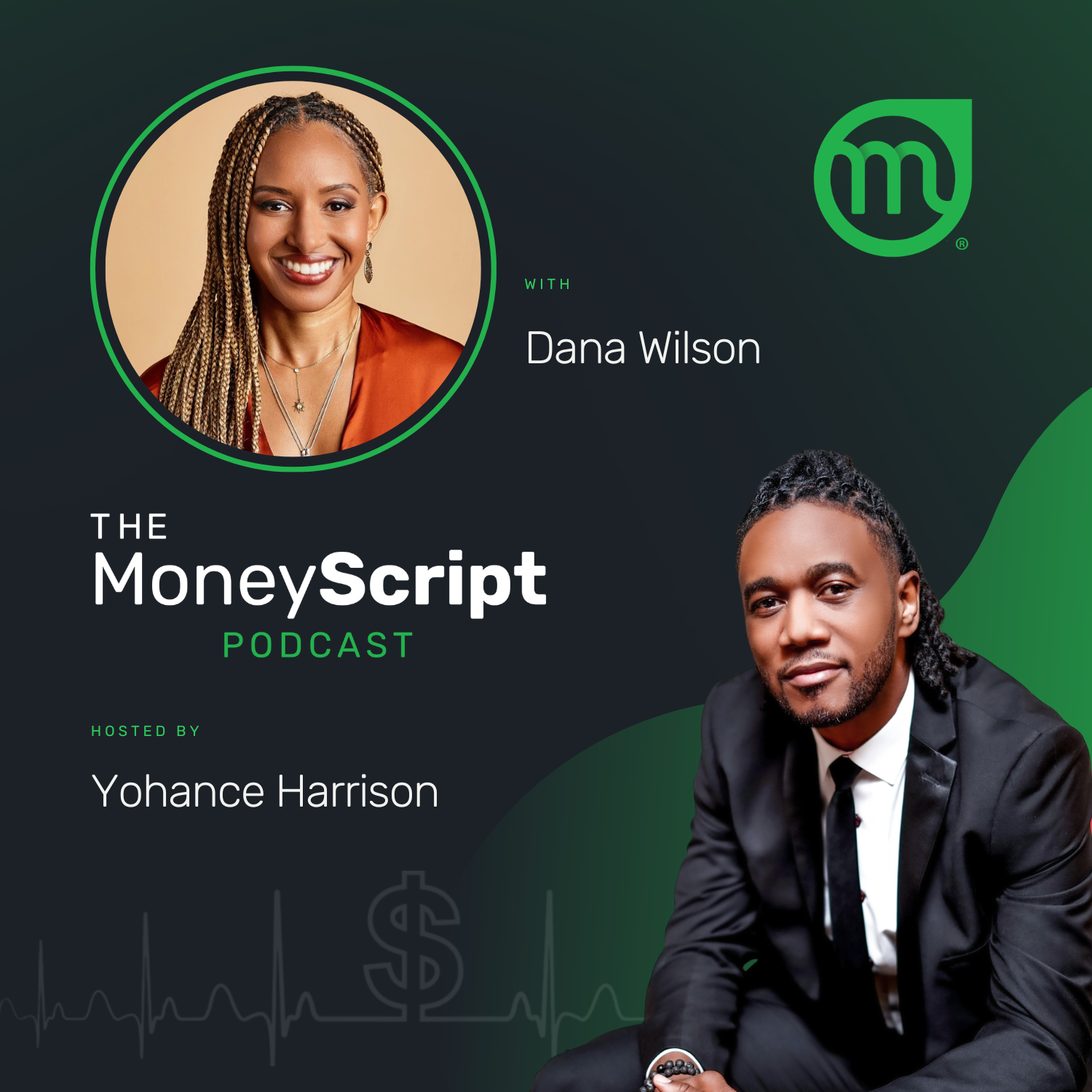
Representation in financial services still matters more than many people want to admit.
That idea runs through this June 30, 2026 conversation on The Money Script Podcast, where Yohance Harrison sits down with Dana Wilson, founder and CEO of CHIP. Their talk covers career transitions, entrepreneurship, financial literacy, trust, and the future of financial services. But the thread that ties it all together is simple: people want to feel seen when they talk about money.
Dana’s story starts in banking. She joined SunTrust right after college in 2006 and got early exposure to how people interact with money at street level. She worked in a small branch, handled different responsibilities, and got a close look at the many faces of wealth — and the absence of wealth too. That foundation mattered because it taught her that money is never just numbers. It’s behavior, access, confidence, and sometimes silence.
From there, she moved deeper into wealth management and Wall Street. That shift sharpened her understanding of how uneven representation still is in the industry. Dana talked openly about being the only Black woman in many rooms and about how rare it was to see people who looked like her in leadership. Yohance connected with that right away, sharing his own experience of going to conferences where diversity could still feel like “2, 3% of the room.”
That part of the conversation is important because it names a reality a lot of people still dance around. For clients, trust matters in every advisory relationship. But trust isn’t abstract. It’s shaped by whether someone feels comfortable enough to ask the real question, admit confusion, or talk honestly about family, fear, debt, ambition, and cultural expectations. When people see someone who understands their context, those conversations often get easier.
Dana didn’t frame this as a symbolic issue. She framed it as a practical one. If clients can’t find professionals they connect with, access breaks down before the relationship even starts. That’s one of the core reasons she built CHIP.
CHIP, which stands for Changing How Individuals Prosper, came out of a moment of frustration and clarity. Dana said the turning point came after George Floyd’s murder, when she asked herself what she could do with her own skills and experience. She wasn’t looking to make a statement for the sake of a statement. She wanted to build something useful. Her answer was a platform designed to make Black and brown financial professionals more visible and more accessible.
That mission is bigger than directory listings. Dana described a gap between the fact that these professionals exist and the reality that many people still struggle to find them. She wanted to help close that gap and make it easier for people to connect with advisors, tax professionals, estate planners, and other experts who might better understand their lived experience and cultural background.
That idea speaks to a larger truth in personal finance: access is not just about information. It’s about connection. Plenty of people know they should “do something” with their money. The hard part is knowing where to start, who to trust, and how to build a team that works together.
That’s where the conversation got especially practical. Dana explained that many business owners and professionals wait too long to think about their personal finances while they build their companies. They pour everything into the business and tell themselves they’ll figure out personal planning later. Her point was that later usually comes with more stress. If your personal finances and your business finances are deeply connected, you can’t afford to ignore one while building the other.
That lesson applies well beyond founders. It applies to anyone who thinks financial planning can wait until income rises, life settles down, or some future milestone arrives. One of the quieter messages in this episode is that financial stability rarely comes from waiting for the perfect moment. It comes from making better decisions sooner, even when life feels unfinished.
The discussion around professional teams was another standout. Yohance brought up a public claim that clients shouldn’t want their financial advisor, CPA, and attorney to know each other because they might collude. Dana pushed back. Her view was clear: in a healthy relationship, professionals don’t need to be best friends, but they do need to work in the client’s best interest. When key people on a financial team don’t communicate, mistakes get missed, strategy gets fragmented, and clients often suffer.
That point matters because many people still approach financial planning in silos. One person handles investments. Someone else does taxes. Insurance sits somewhere else. Estate planning gets postponed. The client is left trying to connect all the dots without the language or confidence to do it well. Dana’s argument was not that clients should hand over control. It was the opposite. Clients need to stay engaged, ask questions, and understand enough to inspect what they expect.
That phrase fits another big theme in the episode: financial literacy as participation, not performance.
Yohance and Dana spent part of the conversation talking about athletes who lose money, fraud in the advisory world, and the damage bad actors do. Dana made a strong point that the visible loss is only part of the story. When someone is cheated, the impact spreads outward. It reinforces distrust in communities that may already feel wary of banks, Wall Street, and wealth-building systems. One scandal can convince countless people to retreat from planning altogether.
That’s why credibility and education matter so much. Not because every person needs to become a financial expert, but because people need enough understanding to stay involved in their own lives. “My so-and-so handles that” is not a strategy. It’s a risk.
The most memorable shift in tone came when Yohance asked Dana about her first memory of money. Her answer was simple and instantly relatable: birthday cards with cash inside. That image opened up one of the best parts of the episode, because it moved from nostalgia into something useful.
Dana talked about the beauty of physical money — counting it, holding it, budgeting with it, seeing it in real time. She said that as society moves further from cash, we may be losing some of the most basic ways children learn what money is. Yohance agreed and tied that to how kids learn math. Counting money teaches number sense, fractions, percentages, and confidence. He shared a story about his nine-year-old quickly figuring out a 50% discount in a store because she had already learned to think through money in concrete terms.
That part of the conversation lands because it connects financial literacy to everyday life. Not to apps, not to jargon, not to abstract school standards. Just to practice. Count the coins. Read the card. Do the math. Watch your parents save. See someone balance a checkbook. Notice the habits. Those moments shape people more than we realize at the time.
Dana made that point beautifully when she said you often don’t appreciate what you saw as a child until adulthood. Then suddenly the routines make sense. That’s a strong reminder for parents, educators, and advisors: the behaviors children watch may matter more than the lectures they hear.
The episode also touched on AI in financial services, and Dana’s take was measured. She sees AI as useful from an operational and infrastructure standpoint, but not as a substitute for human advice. In her view, money still requires conversation, judgment, and context. Technology can pull people in and spark curiosity, but it can also create false confidence. Someone without the basics can ask a tool the wrong question, get a polished answer, and make a costly move without understanding the downside.
That’s a smart caution. AI may increase access to financial information, but access to information is not the same as wisdom. For people with little financial foundation, a confident answer can be more dangerous than no answer at all. Dana’s bigger point was that tools should support human decision-making, not pretend to replace it.
What makes this episode work is that it doesn’t treat money as a narrow technical subject. It treats money as personal history, professional identity, family responsibility, and community trust. Dana moves easily between those levels because her own career has lived across them. She’s worked inside institutions, built independently, and now focuses on creating better access for others.
Yohance helps bring those ideas down to earth. He doesn’t just interview Dana; he meets her in the conversation with his own stories about career timing, family planning, education costs, and what it means to build something meaningful while serving clients. That back-and-forth gives the episode warmth and credibility.
If there’s one takeaway from this conversation, it’s that better financial outcomes usually start with better financial relationships — with money, with trusted professionals, and with the habits people pass on at home. Representation helps. Education helps. Technology can help. But none of them matter much without trust and follow-through.
That’s why this episode stands out. It offers more than commentary on diversity in finance or generic tips about money management. It shows how those ideas connect in real life. A child learning to count cash. A founder deciding to build something after a painful national moment. An advisor trying to help clients stay involved in their own planning. A professional looking around a room and wondering when leadership will finally look different.
Those are not separate conversations. They’re all part of the same one.
And that’s what makes this episode of The Money Script Podcast worth sharing: it reminds listeners that changing financial outcomes starts long before spreadsheets and account balances. It starts with visibility, honesty, education, and the willingness to build something better.


.png)