.svg)
by
Yohance Harrison
May 12, 2023

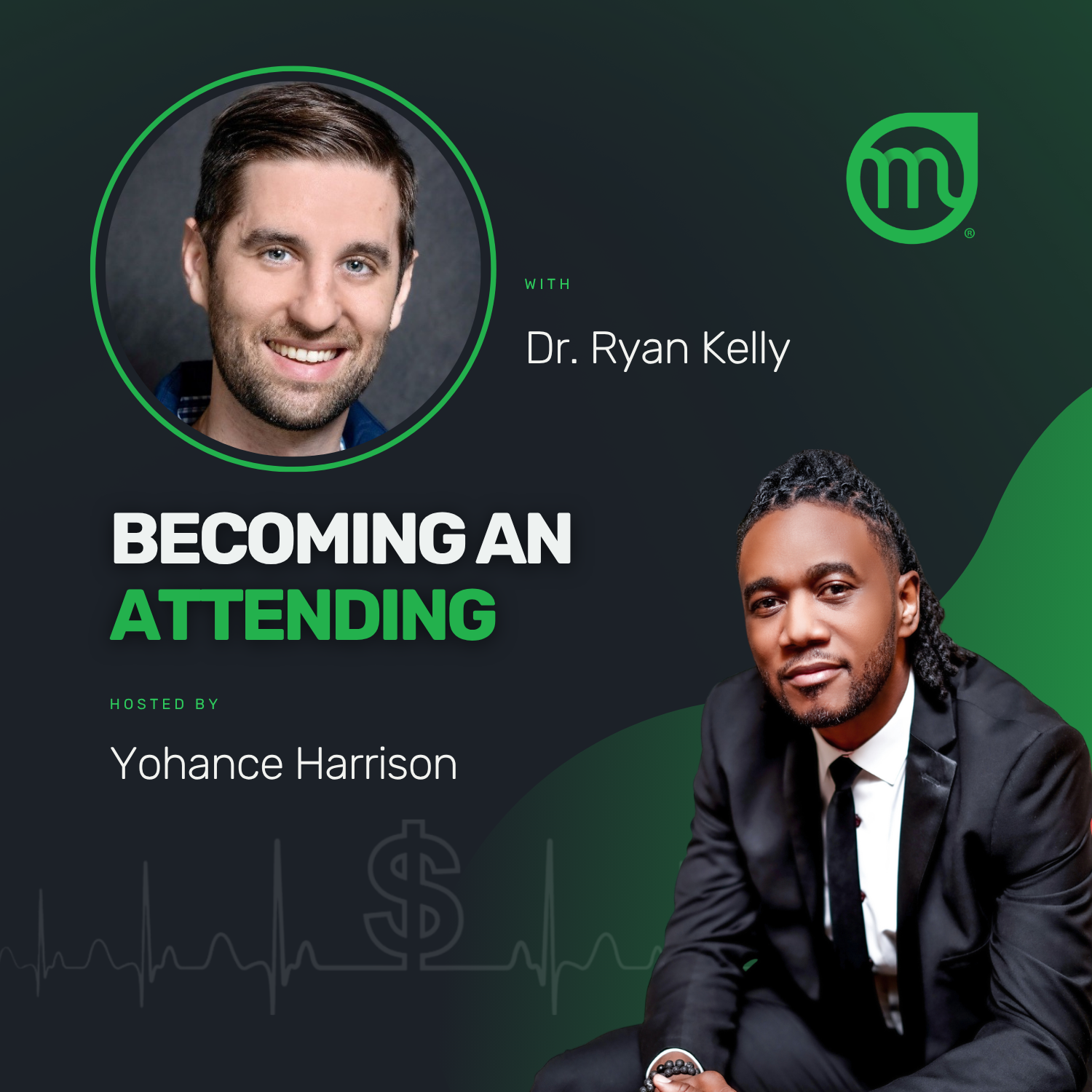
On May 18, 2026, the Becoming an Attending podcast sat down with Dr. Ryan Kelly, an emergency medicine attending in Central Florida, to talk through the new student loan landscape and what it means for future physicians. The conversation stayed grounded in real life: what borrowing looked like for Ryan, what’s changing for students now, and why those changes could ripple through medicine for years.
Ryan’s story matters because he’s exactly the kind of person these policy shifts could shut out. He’s a first-generation college student who says plainly that federal loans made his career possible. Without them, he wouldn’t have gone to college, graduate school, or medical school. That’s not abstract policy talk. That’s a reminder that lending rules shape who gets to become a doctor.
One of the strongest threads in the episode is the gap between the cost of training and the support available to pay for it. Ryan says his private medical school ran roughly $60,000 to $75,000 per year before living costs, and the host notes that many schools haven’t gotten any cheaper. The concern isn’t just that students will borrow differently. It’s that they may not be able to borrow enough through federal programs and will be forced into private lending.
That shift matters for a few reasons. First, private lenders don’t usually offer the same safety nets as federal loans. The host calls out weaker deferment and forbearance options, higher rates, and the common requirement for a co-signer with assets. Ryan adds another problem: young borrowers often have little credit history, no collateral, and very little leverage. In his words, that opens the door to “almost predatory loan style offers.”
Second, debt changes behavior. Ryan argues that if students have to borrow more privately and repay more aggressively, more of them will choose specialties based on salary rather than need. That means fewer people entering lower-paid areas like primary care, even while physician shortages remain a major problem. He points to a long-term cycle medicine has already seen: as training gets more expensive, more graduates move toward higher-paying specialties and fewer choose primary care.
That’s one reason this episode works as more than a student loan discussion. It’s really about the future physician workforce. The host raises the projected shortage of doctors, and Ryan notes that the issue is already visible in primary care and emergency medicine. Even as AI becomes more common in healthcare, he makes the point that technology still can’t replace human care where physical presence and judgment matter.
The episode also spends a lot of time on public service loan forgiveness, which makes sense because many residents and fellows build early qualifying years during training. The host warns listeners to check their loan status directly at StudentAid.gov and pay attention to shifting repayment plan rules. The details are technical, but the bigger message is simple: don’t assume the plan you’re in today will work the same way tomorrow.
Ryan’s take on PSLF is practical. He knew early that he wanted a path closer to private medicine, so forgiveness wasn’t central to his own long-term plan. But he still stresses that residents should understand the option, especially if they’re in longer training programs or may work in nonprofit or community settings later. His broader point is that many future doctors may need PSLF just to make the profession financially workable.
The most useful part of the conversation may be the advice section, because Ryan doesn’t pretend there’s one easy fix. Instead, the show walks through the real-world ways students might try to close the funding gap.
Some of those options are familiar: scholarships, family support, living at home, military programs, and community-based scholarship agreements that trade service for support. The host also mentions working during school, though both speakers are clear that this is unrealistic for most medical students. Ryan doesn’t romanticize any of these choices. He treats them as tradeoffs, not hacks.
That honesty gives the episode weight. There’s no false promise that students can just “budget harder” and solve a six-figure education problem. At the same time, neither speaker gives in to doom. They keep returning to the same point: if medicine is what you want to do, don’t quit on it, but don’t walk into the financial side blindly.
That leads to Ryan’s strongest advice for students, residents, and new doctors: get financially literate early.
When the host asks about his biggest financial mistake, Ryan doesn’t name a loan product or a bad purchase. He says the mistake was assuming he was smart enough to figure money out later. In medical school, a friend told him to read The White Coat Investor. He brushed it off at first because he was busy. Looking back, he sees that delay as costly.
That moment feels important because it’s so common. High-achieving students often spend years mastering science, exams, and clinical training while getting almost no education in debt, budgeting, or long-term planning. Ryan says that once people finally gain financial literacy, many say the same thing: “I’m kicking myself because I didn’t learn this earlier.”
He goes further and makes it part of his own mentorship. He now gifts The White Coat Investor to scribes heading to medical school and tells them to read it before they start. The book isn’t the point by itself. The point is to build a mindset before the borrowing gets bigger and the choices get harder to reverse.
The host backs that up with a cautionary story about a client whose private loans ballooned over many years of education and training. The lesson isn’t just that interest compounds. It’s that a lack of financial literacy can make debt feel unreal until it becomes overwhelming. If you don’t understand how loans grow, how deferment works, or what private borrowing actually costs, you can drift into decisions that take decades to unwind.
What makes this episode especially useful for new doctors is that it doesn’t frame financial literacy as optional or something you learn after becoming an attending. Ryan says plainly that the world still costs money while you’re training, and ignoring that doesn’t make the problem go away. His advice is simple: if you don’t want to become the expert yourself, find someone qualified and trustworthy who can help.
That advice lands because it comes from someone who’s lived the path. Ryan isn’t speaking as a detached commentator. He’s an attending physician who moved through undergraduate education, graduate school, medical school, and residency while navigating the exact debt system they’re discussing. He understands the pressure students feel to just sign what’s in front of them because becoming a doctor is the goal and everything else feels secondary.
Still, he keeps returning to purpose. Near the end of the episode, he urges listeners to remember why they wanted medicine in the first place. If the work is truly what you want, he believes you should pursue it. But he’s equally clear that medicine is not a career to choose lightly for the money. The missed birthdays, lost time, training years, and debt load all make that obvious.
That combination of realism and encouragement is what gives this conversation staying power. It’s timely because the rules are changing now. But it’s also evergreen because the deeper lesson won’t expire: smart people can still make expensive mistakes when nobody teaches them how money works.
For pre-med students, the takeaway is to start learning before the first big loan hits. For medical students, it’s to understand what you’re borrowing and why. For residents and fellows, it’s to check your repayment strategy instead of assuming someone else is tracking it. For new attendings, it’s to run the numbers on forgiveness, repayment, and career choice before lifestyle inflation takes over.
And for anyone advising the next generation of physicians, this episode offers a clear thought: access to medicine depends on more than talent. It depends on whether capable students can still afford to get there.