.svg)
by
Yohance Harrison
May 12, 2023

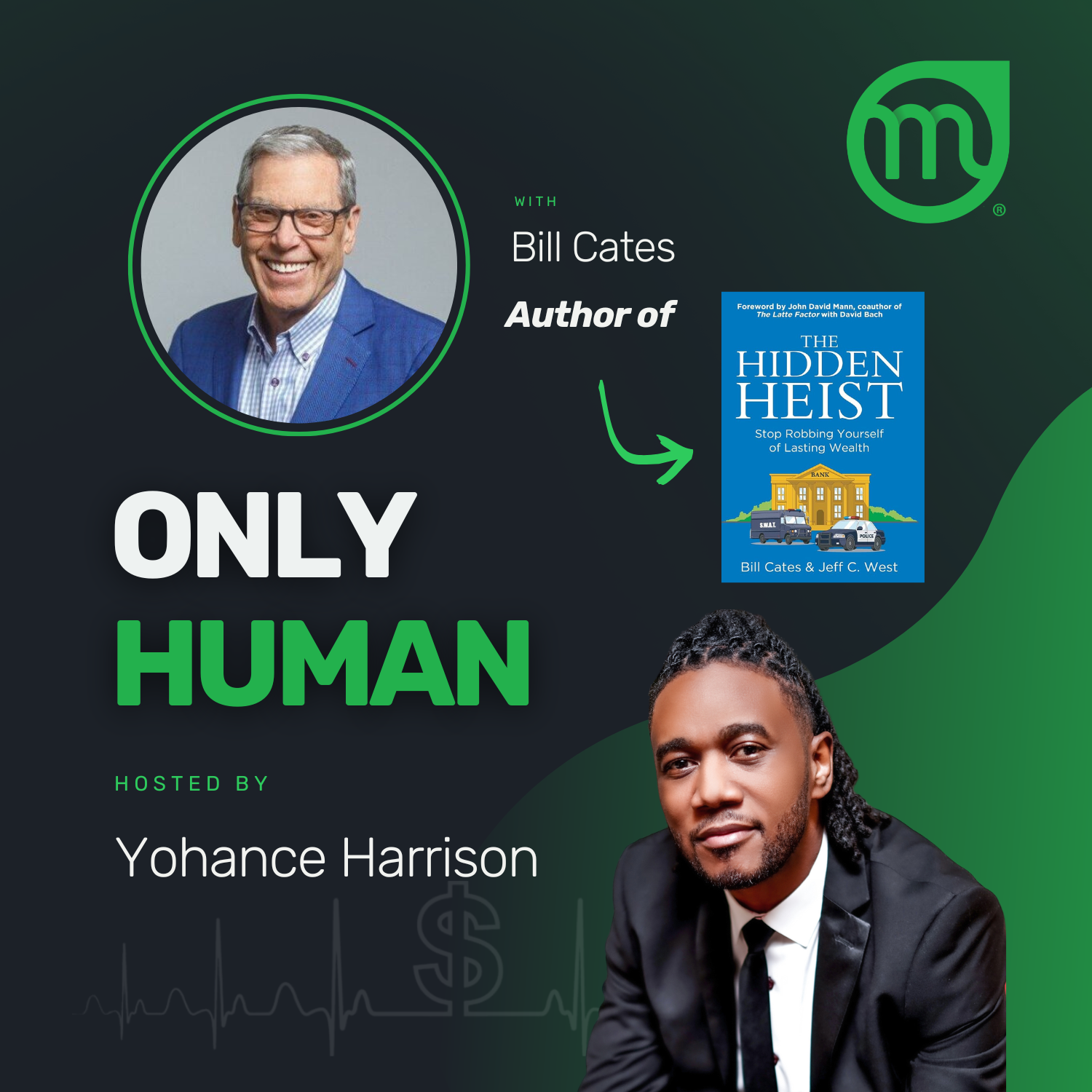
Financial advice keeps getting faster, more automated, and easier to compare. That means the real differentiator isn’t just performance numbers, a plan on paper, or a polished client portal. In this episode of Only Human, Yohance Harrison sits down with Bill Cates to talk about what separates a good advisor from one clients can’t stop talking about: transformation.
Bill’s central idea is simple. Plenty of advisors are still operating at a transactional level. Some are product-focused. Others have moved into a more process-driven planning model. Both can be valuable. But the advisors who create the deepest loyalty are the ones who help clients become someone new — more clear, more confident, more intentional, and more capable around money.
That’s what Bill means by the “transformational advisor.”
He isn’t dismissing products or planning. In fact, he says both can absolutely be transformational. A financial plan can wake someone up. A single question can change how a client sees their future. The point is that advisors shouldn’t stop at delivering advice. They should pay attention to what changes in the client because of that advice.
Bill gives a clear marker for what transformation sounds like: “I used to be this and now I’m this,” or “I used to think this and now I think this.” That shift in identity matters. It’s also what turns satisfied clients into advocates.
One of the strongest parts of the conversation is around cash flow management. Bill argues that this is one of the most underused parts of planning, even though it can create some of the most visible change in a client’s life. He points to the difference between someone saving 4% and someone saving 10% or 15%. That gap isn’t just a math problem. It can change what a client believes is possible.
Yohance pushes on an issue many advisors will recognize: cash flow can feel uncomfortable. Talking about spending is often harder than talking about investing. Bill’s answer is that advisors need some courage, but they also need a bigger sense of purpose. If the work helps fund a dream, reduce stress, and build long-term security, then it’s worth stepping into the discomfort.
That leads to a bigger takeaway from the episode: transformation starts with what the advisor believes. Bill says the advisors most drawn to this idea are often people who have felt some form of transformation in their own lives. They already believe this work matters. They already know financial advice can shape families, futures, and legacies.
From there, the work gets practical.
Instead of letting goals disappear into a planning document, Bill says advisors should keep those dreams alive. Bring them back up in meetings. Ask about them again. Help fund them. Keep the conversation tied to real life. As he puts it, “there’s nothing worse than an unfunded dream.”
Another standout theme is the role of curiosity. Bill encourages advisors to pay closer attention to what clients already say. A client may thank an advisor for clarity, peace of mind, or confidence. Too often, those comments pass by without follow-up. Bill says not to leave them there. Ask, “Can you tell me more about that?” Go one level deeper. Let the client explain what changed.
That matters because, in Bill’s view, clients understand value more clearly when they say it out loud. He ties this to neuroscience and to a long-standing principle in his work: people get more connected to what they articulate for themselves. That’s why he recommends open-ended questions instead of yes-or-no check-ins.
He gives several examples. After a discovery meeting: what stands out as most important? After a client decides to move forward: what tipped the scales? After delivering a plan: what felt most beneficial about the process? During an ongoing review: what’s working, and what should keep happening?
These aren’t scripts for flattery. Bill is clear about that. He says this is not “fishing for compliments.” It’s a way to help clients recognize the value of the work, while also helping the advisor understand how that value lands.
That recognition is closely tied to referrals. In fact, one of the most useful reframes in the episode is Bill’s move away from advisor-centered referral language. Instead of making referrals about how the advisor grows their business or “gets paid,” he says the better approach is to focus on the client experience and the value worth sharing.
That shift turns referrals from an awkward ask into a natural extension of good work. Advisors who believe in the impact of what they do become more comfortable inviting introductions because they no longer see it as self-serving. They see it as helping more people get access to something valuable.
Bill also sharpens the language. He prefers “introductions” over “referrals,” and he repeatedly ties the idea to comfort. If an advisor wants to bring up someone the client mentioned, his suggestion is softer and more collaborative: “assuming we came up with an approach that feels comfortable to everybody, would you be open to discussing a possible introduction?”
That’s a useful distinction. It lowers pressure. It shows respect. And it acknowledges that many people have had awkward or negative experiences making introductions in the past.
Another important layer in the conversation is money psychology. Bill says many advisors underuse this area, even though it may be one of the most transformative spaces in all of financial planning. Clients bring old stories, family dynamics, fear, scarcity, guilt, and shame into every money decision. Sometimes they say it directly. Sometimes it shows up as resistance.
Bill’s point is that if advisors won’t go there, they may never help clients get to the other side of their own self-sabotage. He suggests starting simply: ask about their relationship to money. Ask what messages they got from their parents. Ask what money felt like growing up.
Yohance clearly connects with this part of the discussion. He shares that one of his core discovery questions is, “Why is money important to you?” He says that question opens up fears, hopes, habits, and scripts quickly. It also helps him understand who the client really is.
That exchange leads to one of the most useful reflections in the episode. Yohance says the transformation for advisors may be that they have to stay in discovery mode, even with long-time clients. Bill agrees. A good relationship can still get transactional over time. The meetings happen. The work gets done. But the deeper discovery fades.
That’s where advisors can lose some of the very thing that made them referable in the first place.
Bill encourages ongoing curiosity not just about money feelings, but about life. Ask about vacations, family, children, plans, and what’s changing. Sometimes the smallest conversation reveals a way to help that never would have surfaced otherwise. At minimum, clients feel heard. At best, the advisor uncovers another opportunity to serve.
That idea ties directly back to advocacy. Yohance shares that when clients are given space to talk, other people naturally come up — a brother, a sister, a friend, someone from a trip. Those names often become future introductions, either directly or later when the advisor’s name comes up in another conversation.
Near the end of the episode, Bill shares the story behind his new book, The Hidden Heist: Stop Robbing Yourself of Lasting Wealth. The book uses a bank robbery setup, with comic relief and hostage tension, to explore the money beliefs and self-talk that keep people from building wealth. Bill says the idea came from wanting to create something memorable and story-driven, not another predictable parable.
The bigger purpose behind the book fits the rest of the episode: helping people understand their relationship with money and change the internal stories that hold them back. Bill says some advisors are using the book for themselves, some with their teams, and some with clients and clients’ adult children. For advisors who don’t naturally know how to start these conversations, the book becomes a doorway.
That may be the clearest thread through the whole episode. Whether the topic is planning, cash flow, referrals, or money beliefs, the real work is helping people see themselves differently. More than better portfolios, clients often want relief, confidence, clarity, and momentum. They want someone who sees where they’re stuck and helps them move.
That’s why this conversation feels timely. In a world full of automation and information, the advisor’s edge is still deeply human. It’s the ability to listen for what matters, ask one more question, notice the shift, and help a client put words to the value they’re feeling.
That’s not soft work. It’s the work that sticks.
And if Bill is right, it’s also the work that creates the strongest client relationships, the clearest advocacy, and the most durable growth.


.png)