.svg)
by
Yohance Harrison
May 12, 2023

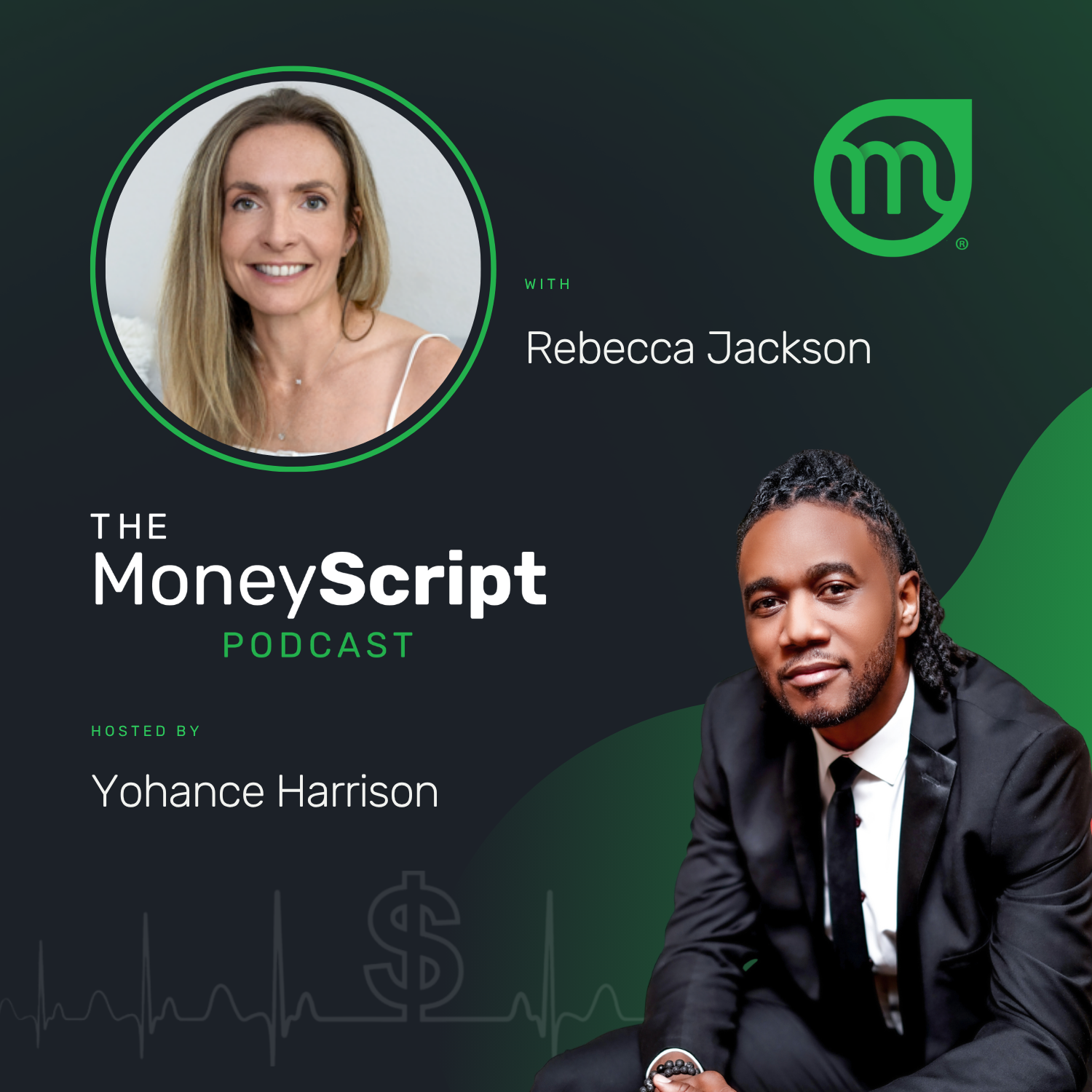
“How much is enough?” sounds like a money question, but in this episode it turns into something bigger. The host asks it the way many business owners and high earners feel: if you can make more, should you? If you can grow from one level to the next, when do you stop chasing the next number?
Rebecca Jackson’s answer is that “enough” has layers. It isn’t just about income, net worth, or investment returns. It’s about whether your money supports a life that actually feels meaningful to you. That sounds simple, but the conversation shows why it’s so hard in real life.
One reason is social pressure. Rebecca points out that many people absorb “unspoken rules” from their industry, city, or peer group. You start to believe that people at your level live a certain way, spend a certain way, and want certain things. The danger is that you end up building your life around what looks right from the outside instead of what feels right to you.
That leads to one of the strongest ideas in the episode: before you can decide what enough is, you have to separate your own values from the “shoulds.” What do you actually care about? What would make life feel full? What are you chasing because it matters to you, and what are you chasing because it signals success?
Rebecca shares a framework she uses with clients through life planning. First, imagine you had what you needed and could build a life that felt content and fulfilled. What would be in it? Then tighten the timeline: if you only had five years left, what would matter now? Finally, if you died tomorrow, what would you regret not doing, saying, or prioritizing?
Those questions cut through a lot of financial noise. In the episode, the host notices that a stock price wouldn’t make the list. That’s the point. In abstract form, money can feel all-important. But when people think about time, relationships, health, family, and regret, they often see that money is a tool, not the finish line.
The episode doesn’t stop at values talk. It gets very concrete around one of the biggest real-world planning issues for high earners: concentrated stock positions. The host and Rebecca talk about people holding too much of one company’s stock, often through RSUs, ISOs, 401(k)s, or long-held gains. These situations aren’t just about portfolio design. They’re deeply emotional.
People tell themselves stories. They believe they know their company better than the market does. They think one more quarter will prove them right. They anchor to a past price. They fear selling too early. They fear paying taxes. They fear missing the next leg up more than they fear the downside. That mix of greed, fear, and familiarity keeps people frozen.
Rebecca puts it plainly: sometimes the issue is that you don’t know everything, even when you think you have an edge. The market responds not just to facts, but to interpretation, mood, speculation, and fast-changing narratives. Yohance business can be strong and the stock can still disappoint. Yohance company can look unstoppable until sentiment changes. That gap matters.
The host drives this home with a funny but sharp reminder: even if someone thinks they have inside knowledge about products or customers, the stock can still get hit by something completely unexpected. That story lands because it shows how fragile stock narratives can be. You may think you’re evaluating the business, but you’re still exposed to human behavior, headlines, and randomness.
That’s why one of the best practical lines in the episode is this question: if the position were cash today, would you use all that cash to buy the stock? Rebecca says she’s only had one person say yes. The host says he uses the same idea with new RSU grants. It works because it strips away the status quo. Instead of asking whether you should keep what you already have, it asks whether you would choose it from scratch.
That is a powerful money management tool because people often defend positions they would never intentionally build. They hold because holding feels passive and selling feels active, even when doing nothing is the bigger risk. The thought experiment exposes that bias fast.
Taxes add another layer. Rebecca says many clients know they should reduce the position, but they don’t want the tax bill. That’s where another strong line comes in: don’t let the tax tail wag the dog. It’s a reminder that taxes matter, but they shouldn’t become the only lens. Avoiding taxes is not the same as making a good financial decision. If selling creates a better long-term outcome and reduces life-changing risk, the tax cost may be worth it.
The host shares a painful example from clients connected to Snapchat, where massive paper wealth turned into large carried-forward losses after the stock dropped hard. That story gives weight to the whole discussion. This isn't a theory. It’s what happens when concentration risk collides with overconfidence and changing market narratives.
Another thread running through the episode is behavioral finance. Both speakers keep returning to how human beings are wired. Scarcity thinking, loss aversion, greed, fear, status, and storytelling all shape money decisions. Rebecca mentions reading research on how certain cues light up the brain and create strong reactions. That matters because it reframes “bad” money behavior. Often people aren’t irrational in a random way. They’re predictably human.
That’s also why the guest’s upcoming writing project is interesting. Rebecca explains that after going through therapy and a difficult divorce, she started noticing that some of the methods used to understand relationship patterns also apply to money. Her idea is that people don’t just use money. They have a relationship with it. They carry money stories from childhood, family habits, emotional triggers, and repeated patterns into adult financial life.
That is a useful lens for anyone interested in financial therapy, behavioral finance, or values-based planning. If money conversations keep circling the same conflicts, spreadsheets alone may not solve them. Sometimes the real work is understanding the story underneath the decision.
The episode’s closing question fits that theme perfectly. The host asks Rebecca for her first memory of money, a signature question on the show. She answers with a vivid story: helping a parent use Quicken and noticing a large negative balance. In that moment, she realized that spending money and having money are not the same thing. It’s a simple story, but it explains a lot. Early money memories often become emotional reference points that shape how people think about security, scarcity, and control.
That’s one reason this episode works so well. It moves between technical money topics and human experience without forcing either side. It talks about stock concentration, taxes, IPOs, and ETFs, but it also talks about mortality, regret, relationships, and what actually makes life feel worthwhile.
For listeners trying to make better money decisions, the takeaway isn’t that ambition is bad or that wealth doesn’t matter. It’s that more is not automatically better. If you never define enough for yourself, the default is endless comparison, endless optimization, and endless risk-taking in service of a moving target.
Yohance better path starts with a few honest questions. What matters to you when you strip away the audience? What kind of life are you trying to fund? What risks are you taking that no longer match your goals? If your portfolio were cash today, would you rebuild it the same way? And are you making financial decisions to serve your life, or arranging your life around financial momentum?
That’s the kind of evergreen thought leadership this episode offers. Markets change. Hot stocks change. New stories replace old ones. But the deeper challenge stays the same: how to use money well without letting it quietly take over the script.