.svg)
by
Yohance Harrison
May 12, 2023

Most money conversations start with tactics. Save more. Spend less. Cut the little indulgences. Max out the retirement account. Stick to the plan.
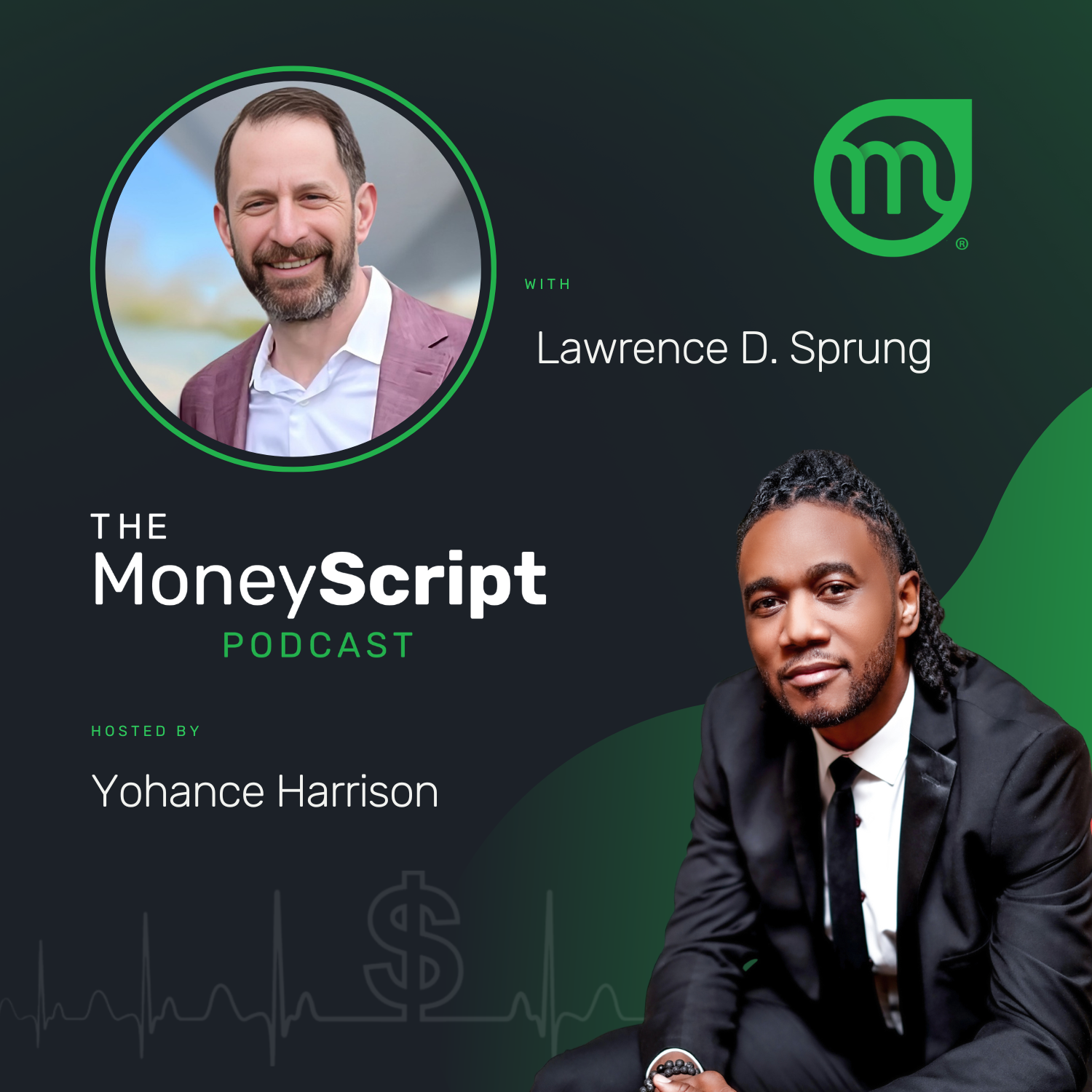
This episode of The Money Script Podcast goes in a different direction. The host and Lawrence D. Sprung spend less time on formulas and more time on meaning. The result is a conversation that feels useful not because it gives a list of rules, but because it asks a better question: what is money actually for?
That question sits underneath almost every part of the episode. It shows up when Lawrence D. Sprung talks about writing Financial Planning Made Personal. It comes through when the conversation turns to family experiences, personal loss, and the importance of enjoying life while still planning responsibly. It also runs through the discussion of Even More Than Money, where money is framed not as the finish line, but as a tool that supports joy, endurance, relationships, and legacy.
That shift matters because many people don’t have a money problem as much as they have a meaning problem. They may be saving consistently, earning well, and checking the right boxes, but still feel disconnected from their finances. The numbers are there, but the purpose is fuzzy.
Lawrence D. Sprung’s main point is simple: personal finance is personal. That sounds obvious, but it pushes back against a huge amount of financial content that treats every person the same. In the episode, he calls out the “everybody should be doing this” style of advice that dominates public conversation. His critique is fair. Rules of thumb can be helpful, but they can also flatten real life. A budget that works for one family may feel punishing to another. A spending cut that looks smart on paper may reduce something that brings genuine joy.
The Starbucks example in the episode works because it’s ordinary. It isn’t about luxury yachts or dramatic overspending. It’s about a small habit people can instantly recognize. Lawrence D. Sprung’s point isn’t that every expense should be defended in the name of self-care. It’s that money decisions should be made in context. If something matters to you, fits in your plan, and doesn’t derail your bigger goals, it may belong in your life. That’s a far more mature framework than pretending all discretionary spending is a moral failure.
That perspective becomes much more powerful when tied to the stories both speakers share about losing their mothers relatively young. Those moments are the emotional center of the episode. They explain why this conversation is not really about coffee, budgeting hacks, or book promotion. It’s about time. It’s about uncertainty. And it’s about the reality that not everyone gets to postpone joy until retirement.
One of the most lasting ideas from the episode is the need to balance present joy with future security. Financial planning often gets framed as a tradeoff between being disciplined now and happy later. Lawrence D. Sprung challenges that framing. He argues that life should not be built around constant sacrifice now in exchange for the hope of freedom decades later. Instead, planning should help people create room for both. Save for the future, yes. But also make space for the trip, the experience, the family memory, the thing that turns money into life.
That doesn’t mean being reckless. It means being intentional. The episode never turns into “spend whatever you want.” In fact, the word that best fits the conversation is tradeoffs. The speakers return to that idea directly. Every decision has a cost. The goal is not to eliminate cost. The goal is to choose it consciously. If a family decides a trip matters enough that retirement might happen a little later, that can still be a sound decision if it reflects their values and fits their broader plan.
This is where the episode becomes evergreen thought leadership rather than just personal storytelling. It speaks to a bigger issue in the financial world: advice often fails when it ignores identity, grief, relationships, and values. People don’t experience money in a vacuum. They experience it through their family history, their fear, their hope, their ambitions, and their memory.
That is also why books matter so much in this conversation. Lawrence D. Sprung talks about writing not as an abstract intellectual exercise, but as a way to turn years of lived experience into something useful for others. His first book, Financial Planning Made Personal, came after years of holding onto ideas about the profession and about how people actually relate to money. His contribution to Even More Than Money takes that further by connecting money to endurance and legacy.
His chapter title, “Why Didn’t I Know He Could Die?”, points to a subject that many financial conversations avoid: death, mental health, and the ripple effects left behind. In the episode, he explains that the chapter was written in reference to his brother-in-law Keith, who died by suicide in 2004. He ties that loss to a broader message that money is not just for building a larger account balance. It can also create space to help others, support family, contribute to causes, and carry a legacy forward.
That’s a meaningful expansion of how people think about wealth. Too often, the cultural version of financial success is static. It lives on a statement. It can be screenshot, ranked, and compared. But a healthier definition of wealth is dynamic. It asks what money allows a person to do, protect, experience, or sustain.
In that sense, the title Even More Than Money fits the episode well. The conversation keeps returning to the “why” behind the dollars. Why save? Why work? Why build? Why invest? Those questions matter because they shape the kind of financial decisions a person can make with confidence. If you know your purpose, tradeoffs get clearer. If you don’t, then even good advice can feel hollow.
There’s also a useful leadership lesson in the section on writing process. Lawrence D. Sprung says plainly that he does not see himself as a naturally great writer. He’s more comfortable in conversation. His process is to get the thoughts out, then rely on a strong editor to help shape them. That kind of honesty is refreshing. It pushes against the myth that expert voices arrive fully polished. Often, the real skill is clarity of thought and willingness to collaborate.
That matters beyond publishing. In business, leadership, and content creation, many people stall because they believe they need to be perfect on the first draft. This episode offers a quieter model: say the true thing as clearly as you can, then let the process improve it. That applies to writing, speaking, planning, and probably money itself.
The closing discussion about life-changing purchases lands especially well because it connects the whole conversation back to lived priorities. Lawrence D. Sprung names family travel and experiences first. He calls them an investment, not an expense. That distinction is worth sitting with. Some purchases depreciate immediately. Others compound in memory, connection, and perspective. Experiences can do that. They can shape how a family relates to one another and how children understand the world.
His second answer, buying a wedding ring and marrying a supportive spouse, adds another layer. Financial outcomes are deeply relational. Who you build a life with affects how money works in practice. Shared values, trust, and support often matter more than optimization tactics. It’s not flashy advice, but it’s true.
His third answer centers on books, including The Infinite Game by Simon Sinek. That choice fits the rest of the episode. Books can change how people frame decisions, and framing is often what drives action. A person who sees money only as accumulation will act differently from a person who sees money as a tool for joy, service, and freedom.
For listeners, the value of this episode is not a checklist. It’s a reset. It invites people to think more carefully about what they are building and why. It encourages a version of financial planning that is responsible without being joyless, thoughtful without being rigid, and personal without becoming careless.
That kind of message tends to age well because it speaks to a permanent tension. People will always need to balance today and tomorrow. They will always face tradeoffs between safety and experience, discipline and delight, accumulation and meaning. There is no universal formula that removes that tension. But there are better questions that help people navigate it.
This episode offers several of them. What brings you joy? What experiences matter enough to plan around? What are you postponing without good reason? What story from your life has shaped how you see money? What does a meaningful use of money look like for you, not for some generic “everyone”?
For advisors, creators, and business owners, there is another lesson here too. People are hungry for content that treats them like humans, not spreadsheets. The strongest financial voices in the years ahead will likely be the ones who can connect practical advice to real life. Not by abandoning strategy, but by grounding it in what people care about most.
That’s what makes this episode stand out. It doesn’t reject planning. It humanizes it. It says money matters, but meaning matters more. It says retirement matters, but life before retirement matters too. It says the balance sheet is important, but the memories, relationships, and values behind it are what give that balance sheet any real weight.
If you’re trying to build a healthier relationship with money, this is the kind of conversation worth sitting with. Not because it hands you all the answers, but because it helps you ask better questions. And in personal finance, better questions usually lead to better decisions.


.png)