.svg)
by
Yohance Harrison
May 12, 2023

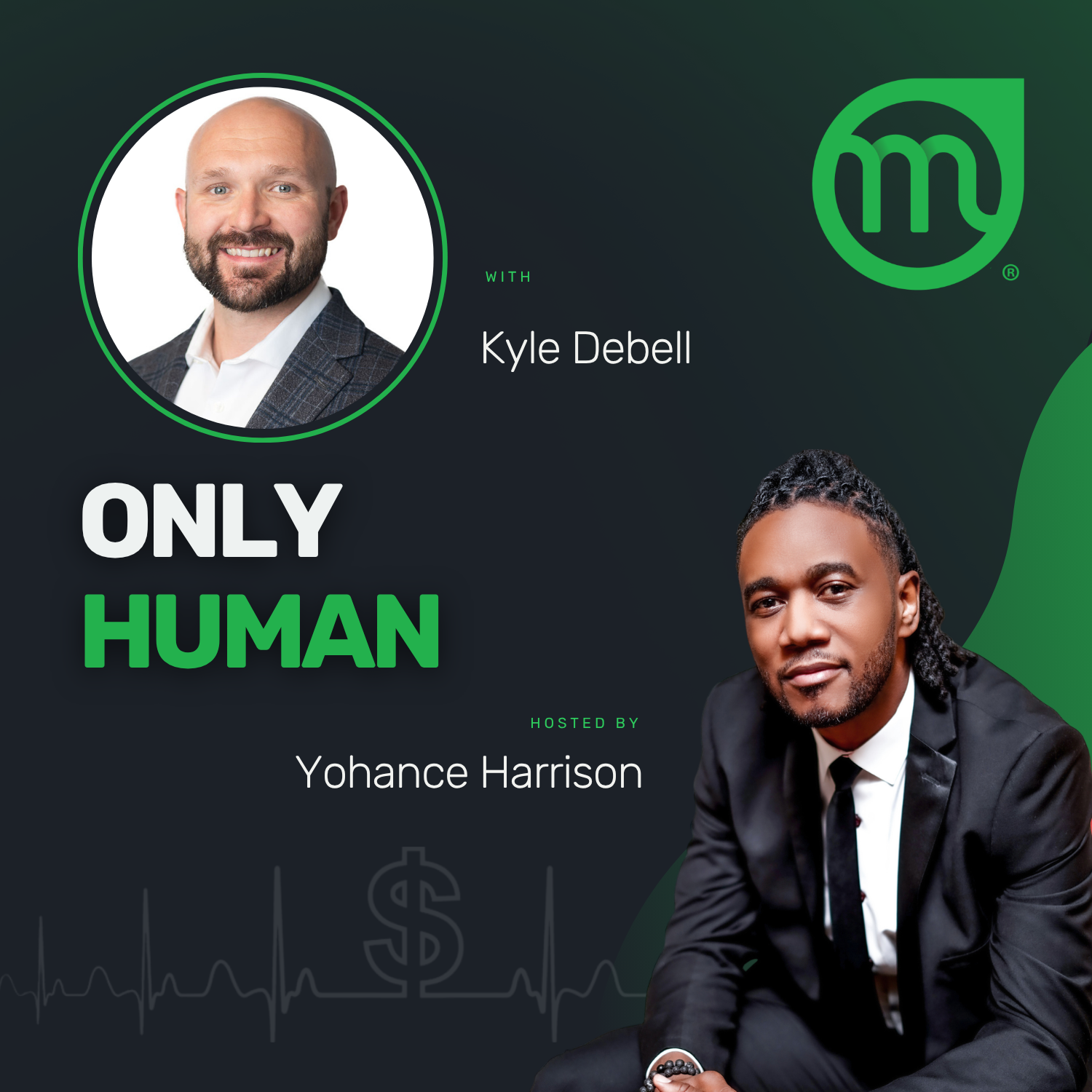
Financial advice is getting faster, more automated, and more efficient. That part is obvious. AI can summarize meetings, draft emails, organize client data, and surface planning opportunities in seconds. But this conversation between Yohance Harrison and Kyle DeBell makes a stronger point: speed is not the same thing as wisdom, and efficiency is not the same thing as trust.
That’s what made this Only Human episode stand out. It wasn’t a generic “AI is changing everything” conversation. It was a grounded discussion about what should stay human as technology keeps improving. The answer, again and again, was decision-making, values, and the ability to help people pause before reacting.
Kyle framed behavioral financial advice as the application of traditional finance, neuroscience, and psychology. That matters because most client decisions are not made in a clean spreadsheet state. People react under stress, under excitement, under uncertainty, and under old patterns they may not even recognize in the moment. The advisor who understands that is doing more than portfolio construction. That advisor is helping a person make better decisions more often.
One of the strongest ideas in the episode was that AI should create room for deeper client work, not less client work. Kyle said he’s excited about technology because it can remove tedious tasks. But he also warned about the fork in the road: some advisors will use that efficiency to protect their time, while others will use it to go deeper with clients. That distinction feels small on the surface, but it may define the next era of advice.
If technology handles note-taking, workflows, and basic analysis, the advisor’s best use of time shifts. The real opportunity is not just getting through more meetings. It’s having better meetings. It’s listening longer. It’s asking the second question. It’s noticing when a client’s emotional state is driving the conversation more than the numbers are.
The neuroscience section gave that idea a practical foundation. Kyle explained that outside events affect the body almost instantly. Emotions show up before people can logically sort through them. That’s a powerful reminder for advisors because clients often arrive carrying stress from somewhere else. Sometimes it’s market fear. Sometimes it’s a career decision. Sometimes it’s something as ordinary as a bad morning. The source may not look financial at all, but it still affects financial conversations.
Yohance made that point vivid with two stories. One was directly related to a prospect who showed up unprepared, questioned the process, and kept resisting the onboarding steps. The other was about missing trash day and carrying that frustration through the rest of the day. Both stories drove home the same lesson: when stress spikes, people can stay stuck in reaction mode unless they pause, reflect, and reconnect with what matters.
That’s where values-based advising becomes more than a feel-good concept. In this conversation, values were described as decision filters. They help advisors and clients move from “What’s the right answer?” to “What decision fits what matters most?” That shift can change everything.
It also changes the role of the advisor. Instead of being the person who always delivers the answer fastest, the advisor becomes the person who helps the client think better. Yohance said it plainly: “The answers are inside of you.” His role is to guide the client to the financial implications of the choice, not force the choice itself. That’s a subtle but important distinction, especially in an environment where clients can get instant answers from software.
The conversation around pause length and silence was a great example of this. Yohance talked about using AI meeting tools to measure how long he pauses before answering questions. That sounds simple, but it gets at something deeper. Advisors often feel pressure to respond immediately, especially when the answer seems technical and obvious. But the fastest answer is not always the best answer. A short pause can create room for clarification, better framing, and a more meaningful exchange.
Kyle extended that idea by asking whether silence after the advisor asks a question should be measured too. That’s smart. Silence can feel uncomfortable, but it’s often where the client is actually thinking. Advisors who rush to fill the gap may miss the most important part of the conversation. In that sense, AI isn’t replacing judgment here. It’s helping advisors observe their own behavior more clearly.
That may be one of the best use cases for AI in wealth management right now: not replacing empathy, but sharpening self-awareness. Yohance described prompting his tools with his own values and asking how well he stayed aligned with them in meetings. He also pulls out client values and looks for signs of alignment or tension. That use of technology feels especially valuable because it supports the advisor’s growth instead of pushing the advisor farther away from the relationship.
Another memorable thread in the episode was how emotion doesn’t always show up as fear. Sometimes it shows up as excitement. Kyle pointed out that a client who gets a raise, promotion, or bonus may make quick decisions from exuberance just as easily as another client sells from panic. That matters because advisors often prepare for downturn emotions, but not always for windfall emotions. Better advice means helping clients slow down on both sides of the emotional spectrum.
The pension and Social Security story captured this perfectly. Kyle described a client whose pension arrangement had changed, creating uncertainty. By the numbers, delaying Social Security may have been the better move. But the client valued security and was losing sleep over the loss of guaranteed income. Once the advisor revisited the client’s values, the decision became clearer. Start Social Security now, accept the lower amount, and restore peace of mind.
That story is a useful reminder that “best” advice is not always the mathematically highest outcome. Sometimes the best advice is the one that lets a person sleep at night. A purely digital experience may keep repeating the optimized answer. A human advisor can understand why the optimized answer may still be the wrong answer for that person.
The most emotional moment in the episode came when Kyle shared the story of his mother’s death and the call he received from her advisor. After a brief condolence, the advisor moved directly into risk-tolerance questions. Kyle’s response was immediate: “I’m not keeping a penny with you.” It was a hard story, but it made the episode’s central argument impossible to miss.
That moment matters for every advisor thinking about the future of client relationships and the transfer of wealth. Younger heirs may want digital convenience, but they still want to be seen and heard. When grief, fear, uncertainty, or major life change enters the picture, the human element is not a bonus feature. It is the service.
The transfer-of-wealth discussion added another layer. Kyle argued that the next generation will expect speed and simplicity, but they will also need context. They need help understanding not just what they inherited, but what it meant to the person who built it. That includes the values behind the money. Advisors who can connect those dots may be far better positioned to keep relationships across generations.
Yohance then turned the conversation into a practical challenge for advisors: see how long you can go in an intro conversation without talking about numbers. Let the client bring them up if they want, but lead with the person, not the portfolio. Ask what matters, how they make decisions, and what they want life to look like. He even shared that a new client chose him because he was “the first person that actually got to know me.”
That line is worth sitting with. In a profession built on trust, too many first meetings still sound like intake forms. Income, assets, risk tolerance, retirement age. Those details matter, but they don’t build a relationship on their own. A values-first conversation doesn’t ignore the numbers. It puts the numbers in context.
The lighter “marry, divorce, date” segment worked because it reinforced the whole theme in a memorable way. Kyle said he’d marry his CRM because systems and processes help him stay consistent. He’d date ChatGPT-style tools because they’re becoming useful in daily work. And he’d divorce old habits around lead generation. That answer was practical and honest. It also showed that adopting tech well doesn’t require becoming a tech evangelist. It requires knowing what each tool is for.
That may be the biggest takeaway from this episode. Technology is best when it supports the advisor’s core job instead of redefining it too narrowly. The job is not just planning. It’s helping people think, decide, and act in ways that line up with what matters most to them. The spreadsheets matter. The recommendations matter. Automation matters. But none of it replaces the advisor who can slow a conversation down, hear what’s underneath the question, and respond like a human being.
For advisors trying to stand out in a crowded market, that’s not soft. It’s strategic. It’s how trust is built. It’s how better decisions happen. And it’s how advice stays relevant even as the tools keep changing.
This conversation made that case clear. The future probably does belong to advisors who use AI well. But more specifically, it belongs to advisors who use AI to become more present, more aware, and more human.